
I Quit Believing That Design Need Talent
Vegy Januarika
1/7/20264 min read
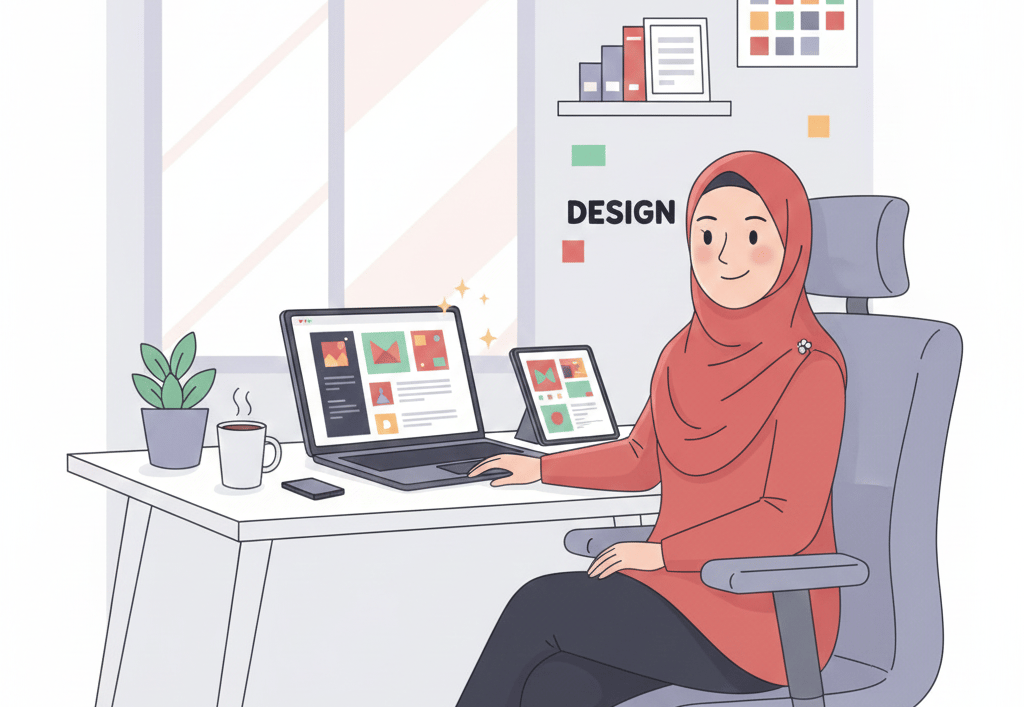
For a long time, design felt like a closed world I wasn’t invited into.
I thought I had to be “born creative,” know expensive software, or spend years studying design to even belong in the conversation. I put designers in a separate category of people, talented, confident, artistic. But, not me.
Whenever someone asked, “Can you design this?” my answer came out automatically:
“I’m not good at drawing.”
I believed that story for years.
What changed wasn’t talent. It was access.
Today, tools like Canva and AI removed the gatekeeping. Suddenly, design wasn’t about technical mastery, it was about decisions. And that’s when it clicked for me.
Design isn’t a genetic gift. It’s not about sketching perfectly or memorizing shortcuts. Design is choosing how something looks, feels, and communicates. If I can decide what to wear, what photo to post, or how to arrange words in a message, then I already understand design at a basic level.
The real difference between people who design and people who don’t?
Someone started. The other one kept waiting.
When the Blank Page Becomes the Enemy
The hardest part for me wasn’t learning tools. It was opening a new project and seeing… nothing.
A blank canvas sounds freeing, but for beginners, it’s exhausting. Too many choices appear all at once. Alignment. Colors. Fonts. Image placement. Size. Spacing.
I’d know what I wanted to say, but not how to say it visually. And before I placed anything on the canvas, I already felt tired.
That’s where most people stop not because they lack creativity, but because they’re forced to make decisions before they’ve built confidence.
I’ve learned that beginners just need direction.
Why I Stopped Feeling Guilty About Templates
I think using templates isn’t cheating. It’s learning.
Even professionals don’t reinvent everything from zero. They reuse structures, systems, and patterns that already work. A template simply removes unnecessary friction so I can focus on the message instead of fighting layout decisions.
When I use templates, I study them. I notice how text is spaced, how colors work together, where images are placed. Over time, those choices stop feeling foreign.
My personal process is simple:
I start choosing a background with color or image.
I add text if the message needs clarity (most of my content does).
I keep only what’s necessary.
I adjust colors until everything feels balanced.
Eventually, I notice patterns in what I keep changing and what I leave untouched. That’s how my style starts forming naturally.
Creative voice doesn’t come from starting with nothing. It comes from repeated decisions.
Color Don’t Need Magic Spell
I used to think color required a special artistic sense. Now I know it mostly requires discipline.
The biggest mistake I made early on was using too many colors. Not bad colors, just too many of them. Every additional color adds mental noise for the viewer.
Now I keep my design simple with:
One main color
One accent color
Black or white for text
That’s enough for most of my designs.
As I create more, I notice preferences forming. I lean toward certain moods and tones without forcing them. That consistency across my work? That’s my visual identity developing on its own.
Text Is Where Most Designs Break
This surprised me the most.
I assumed images carried the design. In reality, text does most of the work.
If the font is too small, the hierarchy unclear, or too many fonts are competing for attention, the design fails even if everything else looks nice.
Now I follow a simple rule:
Headings are clearly bigger
Body text is easy to read
Captions stay subtle
And I limit fonts to two. More than that and everything starts to feel messy.
Good design isn’t about fancy typography. It’s about clarity.
Learning to Respect Empty Space
At first, empty space made me uncomfortable. It felt unfinished like I forgot something.
But space isn’t emptiness. It’s structure.
White space gives the eyes a place to rest. It allows important elements to stand out. Without it, everything competes for attention.
Now, when I’m unsure whether a design is finished, I try removing something instead of adding more. If it still works, I leave it out.
That simple habit taught me more than any tutorial.
Perfection Slows Everything Down
Perfection almost stopped me from sharing anything.
I compared my early designs to people who had years of experience. I kept tweaking, adjusting, and second-guessing until the design never left my screen.
Eventually, I learned this the hard way:
Done beats perfect. Every time.
Your first designs aren’t supposed to be great. They’re supposed to exist. Growth only happens when work leaves your drafts folder and enters the world.
Progress doesn’t come from thinking harder. It comes from making more.
Systems Changed Everything for Me
Over time, I stopped making the same decisions repeatedly.
I saved color palettes. I reused layouts. I created my own mini-templates. That freed my creativity.
When the small choices are already decided, I have more energy for the message, the story, the idea that actually matters.
That’s how professionals work. And it’s something anyone can start doing today.
I Knew More Than I Thought
Looking back, I realize I was learning design long before I ever tried it.
Scrolling. Observing. Noticing what made me stop and what made me skip. My brain was already collecting data.
The instincts were there. I just didn’t trust them yet.
The gap between where I was and where I wanted to be wasn’t talent. It was practice.
So I started small. One design. Then another. Not masterpieces, just finished things.
That’s how it happens.
You don’t become a designer by declaring it.
You become a designer by designing.
The door was never locked. I just had to push it.
If you’re reading this, open Canva. Pick a template. Change something. Publish it. That single action is enough to break the story that says “I’m not a designer.”