
Freedom Through Freelancing, What?
Vegy Januarika
1/6/20266 min read
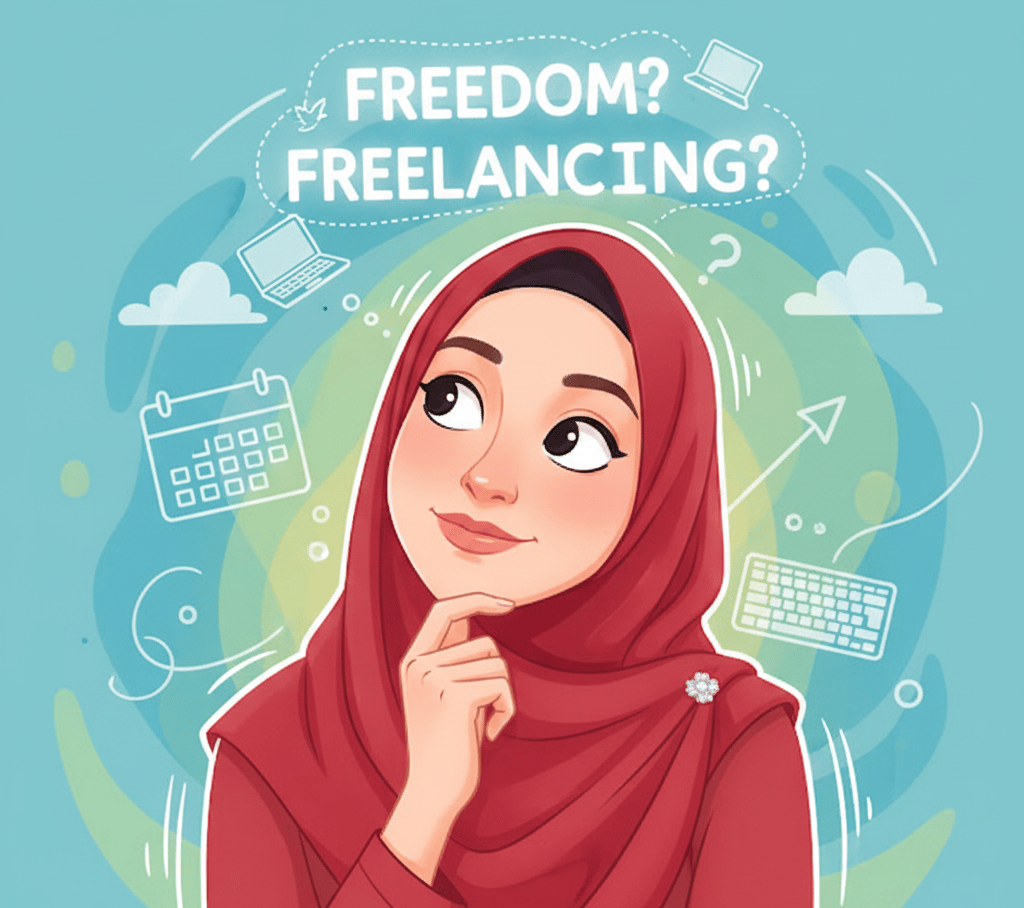
There’s a fantasy that used to live in my head when I was still working a desk job. It usually showed up on Monday mornings or during especially soul-crushing meetings. The fantasy went like this: I’d wake up without an alarm, make a hot drink in my pajamas, open my laptop, work for a few hours on something I actually cared about and somehow earn more than I ever did at my office job.
I won’t lie. Some of that is real.
But what no one tells you is freedom is surprisingly heavy to carry.
When Freedom Felt Heaviest
When I first started freelancing, the absence of structure felt exhilarating.
No commute.
No forced small talk with coworkers.
No pretending to look busy when the boss walked by.
But after about two weeks, something strange happened.
One morning, I woke up and realized that nobody was waiting for me. No one would notice if I didn’t work today. Or if I didn’t make money today. Or tomorrow. Or the day after that.
That moment, I learned, is where most people either truly become freelancers or quietly go back to their old jobs.
Because here’s what those “quit your 9-to-5” posts don’t tell you:
When you have all the freedom in the world, you also carry all the responsibility.
And responsibility resting on one shoulder is extremely exhausting.
What I Got Wrong About Skills
Before I started freelancing, I heard the same advice everywhere:
“What’s the one small service you’re going to offer?”
It sounded simple. Be a writer, or a designer, or a developer. Build a portfolio. Find clients. Get paid.
Except it was never that clean.
The truth is, I didn’t have one neat, marketable skill. I had a messy collection of things skills I was kind of good at, tasks I used to do at my old job, things I learned from YouTube, and plenty of things I was just winging.
The temptation was to offer everything. To be the freelancer who does “writing, editing, social media management, basic design, and also wants to build personal branding.”
I did exactly that. Most beginners do.
I thought casting a wider net would catch more fish. What actually happened was the opposite: I looked like someone who didn’t really know what they were doing. Because specialists get hired. Generalists get ignored.
It took me months to understand that choosing one thing isn’t limiting yourself. It’s giving yourself permission to get really good at something. And getting really good is the only thing that actually makes money.
How I Built My First Portfolio from Nothing
Here’s the cruel irony of freelancing: to get clients, you need a portfolio. But to have a portfolio, you need clients.
When I was just starting out, I spent weeks stuck on this problem like it was an unsolvable riddle. I didn’t want to lie, but I also didn’t have real client work to show. Everything I had done was either from my previous job (which I couldn’t share) or personal projects that clearly looked like personal projects.
The breakthrough came when I stopped seeing my portfolio as proof of experience and started treating it as proof of competence.
No one actually cares whether your sample work was done for a real client or a fictional company you made up. They care about one thing: can you do the job?
I wanted to offer translation services. So I simply took screenshots of my translations source language on one side, target language on the other and labeled them as my portfolio. That was it. I made it in less than 15 minutes.
And it worked.
I landed my first $5 client.
Learning the Proposal Dance
Getting your first client feels impossible until it suddenly happens. And then you think, What now?
Most freelancers assume the hardest part is getting hired. In my experience, the real challenge starts after you say yes.
I remember my early days on freelancing platforms. I was so desperate to sound professional that I overcomplicated everything. It took me a full month to land my first client.
I wrote proposals that were far too long. I asked questions I already knew the answers to. I apologized for things that weren’t my fault. I even talked about how good I was at sports while the client was simply looking for a translation service.
Eventually, I understood that it all came down to clarity.
Clients don’t want your life story. They want simple, clear answers to four things:
What exactly will you do?
When will it be finished?
How much will it cost?
What happens if something goes wrong?
Answer those clearly, and you’re already more professional than half the freelancers out there.
The Loneliness I Didn’t Expect
There was one thing I wasn’t prepared for at all: the silence.
Working from home means there’s no one to celebrate small wins with. No one to complain to when a client is difficult. No one to have lunch with or casually ask, “Hey, is this normal?”
I woke up alone. Worked alone. Solved problems alone. Made decisions alone.
On good days, that solitude felt like peace.
On bad days, it felt like abandonment.
I’m not sharing this to scare anyone. I share it because I wish someone had warned me. When it hit me, I thought something was wrong with me. I thought I wasn’t built for this life.
But the truth is, most freelancers feel this way. We just don’t talk about it, because it sounds like complaining about a life we chose.
The solution wasn’t complicated. I needed community online groups, fellow freelancers, people who understood. Not many. Just some.
Because freelancing can be solitary, but it doesn’t have to be lonely.
My Complicated Relationship with Money
Let’s talk about the thing everyone avoids: money. Money behaves strangely in freelancing.
Some months, I earned more than I ever did at my old job. Other months, I found myself quietly browsing job listings again.
The instability wasn’t the hardest part. The hardest part was pricing.
How much should I charge? Too high, and I’d scare clients away. Too low, and I’d resent the work. Somewhere in the middle but where exactly is that?
For the first six months, I undercharged. Not because I didn’t know my worth, but because I was afraid of losing opportunities. Every time I quoted a rate, I immediately wanted to lower it.
Here’s what I learned: clients who only care about price are not clients you want. They’ll always look for someone cheaper. They’ll always ask for more. They’ll never truly value your work.
The right clients understand that quality costs money. They don’t argue about your rate, they ask about your availability.
I learned to price my work as if I believed in it, even before I fully did.
Why Freelancing Was Never Passive for Me
Social media loves to sell a dream. Quotes about working from anywhere. Making money while you sleep. Building a business that runs itself.
It’s not entirely a lie.
But it’s not entirely true either.
Most days, my freelancing life looks like waking up, checking emails, doing actual work, managing clients, sending invoices, chasing unpaid ones, learning new skills, updating my portfolio, marketing myself and trying to squeeze in a real life somewhere in between.
There’s nothing passive about it.
But I own my time in a way I never did in a corporate job. And that ownership—that agency over my own life is worth the uncertainty.
I choose inconsistent income over corporate tyranny.
What Freedom Actually Means to Me
If I could talk to my younger self before starting this journey, I’d say this:
Freelancing isn’t freedom from work. It’s freedom to choose your work.
I still have deadlines.
I still deal with frustrating clients.
I still have days when I don’t want to open my laptop.
But I can say no.
No to projects that drain me.
No to clients who don’t respect me.
No to work that goes against my faith.
That ability to refuse is the closest thing to freedom I’ve ever known.
The Truth I Had to Accept
Freelancing isn’t easier than a regular job. It’s just different.
Some days I feel brilliant. Other days I feel like a fraud. Most days, I just feel tired.
But if you can accept that, you’ll find yourself.
Not the polished LinkedIn version with a dozen titles. The real version. The one who shows up even when it’s hard. The one who keeps going when no one’s watching. The one who builds something from nothing, slowly, quietly, without applause.
And honestly?
That person is worth meeting.